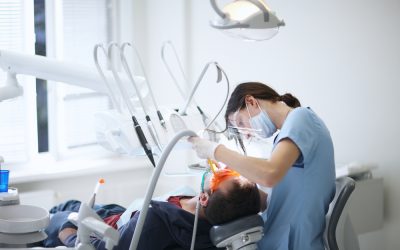
Technology is transforming the way dentists learn and practice. One of the most exciting innovations is augmented reality in dentistry. This cutting-edge tool is changing dental simulation and digital learning, helping students and professionals refine their skills like never before.
Imagine a world where dental students can practice complex procedures in a virtual environment before working on real patients. With augmented reality in dentistry, this is becoming a reality. Let’s explore how AR is shaping the future of dental education.
What is Augmented Reality in Dentistry?
Augmented reality (AR) is a technology that overlays digital images and information onto the real world. In dentistry, AR allows students and professionals to visualize dental structures, simulate treatments, and interact with digital models in real time.
Unlike virtual reality (VR), which creates a fully digital environment, augmented reality in dentistry blends virtual elements with real-world settings. This makes it ideal for dental simulation and digital learning.
The Role of Augmented Reality in Dental Education
Traditional dental education relies on textbooks, lectures, and hands-on practice with models or real patients. While effective, these methods have limitations. Augmented reality in dentistry enhances learning by offering interactive and immersive experiences.
1. Enhanced Visualisation of Oral Anatomy
Understanding complex dental anatomy is crucial for students. AR helps by:
- Providing 3D interactive models of teeth, nerves, and jaw structures.
- Allowing users to rotate and zoom in on anatomical details.
- Overlaying digital information on real-life dental models.
This makes it easier for students to grasp spatial relationships and understand oral structures more clearly.
2. Realistic Dental Simulation
Dental simulation is a critical part of training. AR offers a new way to practice procedures before treating real patients. With AR-powered digital learning, students can:
- Perform virtual root canals, extractions, and fillings in real time.
- Get instant feedback on technique and accuracy.
- Experience different clinical scenarios, such as gum disease or tooth decay.
By reducing reliance on real patients for early training, AR improves patient safety and boosts student confidence.
3. Interactive Learning and Skill Development
AR transforms passive learning into an interactive experience. Students can:
- Watch step-by-step procedural guides projected in front of them.
- Use hand-tracking technology to simulate drilling or suturing.
- Learn at their own pace with on-demand AR training modules.
This digital learning approach ensures students develop the necessary skills before working in a real clinical setting.
How Augmented Reality is Used in Professional Training
AR is not just for students—it’s also benefiting practicing dentists. Augmented reality in dentistry helps professionals refine skills and stay updated with the latest techniques.
1. Live Surgery Guidance and Assistance
During procedures, AR can provide real-time overlays of patient X-rays, CT scans, and treatment plans. This helps dentists:
- Plan precise implant placements.
- See underlying nerves and bone structures while working.
- Improve accuracy and reduce surgical risks.
With AR-powered glasses, dentists can access crucial data hands-free, enhancing efficiency during procedures.
2. Remote Mentorship and Collaboration
AR enables real-time collaboration between dentists and experts worldwide. With AR headsets, specialists can:
- Guide colleagues through complex procedures remotely.
- Provide real-time feedback during treatments.
- Train dental professionals globally without physical presence.
This makes dental education more accessible and fosters continuous learning.
3. Patient Education and Treatment Planning
Patients often struggle to understand dental conditions and treatments. AR bridges this gap by:
- Showing 3D visualizations of oral issues like cavities or misaligned teeth.
- Demonstrating how procedures like braces or implants work.
- Helping patients make informed decisions about their treatment.
This improves patient engagement and enhances the dentist-patient relationship.
The Benefits of Augmented Reality in Dentistry
Why is augmented reality in dentistry becoming so popular? Here are the key advantages:
✅ More Effective Learning
AR makes dental simulation more immersive, helping students learn faster and retain information better.
✅ Hands-On Practice Without Risk
Students and professionals can practice techniques without risk to real patients, ensuring safer treatments.
✅ Improved Precision and Accuracy
AR helps dentists perform procedures with greater precision, reducing errors and improving outcomes.
✅ Enhanced Collaboration
AR enables remote training and mentorship, allowing experts to guide professionals worldwide.
✅ Better Patient Understanding
Patients can visualize their oral health issues and treatments, leading to better compliance and satisfaction.
Challenges and Limitations of Augmented Reality in Dentistry
Despite its benefits, AR in dental education and practice has challenges:
🔴 High Costs
AR technology, including headsets and software, is expensive, making it difficult for smaller clinics and schools to adopt.
🔴 Learning Curve
Dentists and students need training to use AR effectively, which can take time.
🔴 Technology Integration Issues
Many dental institutions rely on traditional methods, and integrating AR into existing curricula can be challenging.
🔴 Limited Availability
AR dental simulation tools are still developing, and not all procedures can be simulated with high accuracy yet.
As technology advances, these challenges will likely become less significant, making AR more accessible in dental education and training.
The Future of Augmented Reality in Dentistry
The use of augmented reality in dentistry is expected to grow rapidly in the coming years. Some exciting developments include:
- AI-Powered AR: Smart AR systems will provide automated feedback on procedures.
- Haptic Feedback Integration: Future AR tools may include touch sensations, making simulations feel more realistic.
- Wider Adoption in Clinics: More dental schools and clinics will integrate AR into daily practice.
With these advancements, augmented reality in dentistry will continue to revolutionise dental education, simulation, and patient care.
A New Era in Dental Training
Augmented reality in dentistry is transforming dental simulation and digital learning, offering a safer, more effective, and interactive way to train future dentists. From virtual procedures to real-time surgery guidance, AR is reshaping the way dentistry is taught and practiced.
As technology continues to evolve, AR will play an even bigger role in dental education and treatment, bringing us closer to a future where learning is fully immersive and accessible worldwide.
Would you be open to trying AR-based dental training? Let us know your thoughts in the comments!